Caring for the Seeds of Faith
 Homily for the Fifteenth Sunday in Ordinary Time
July 12, 2020
Today’s story about the farmer sowing seed reminds me of a story I once read about Benjamin Franklin. As you may know, Franklin was a scientist who liked to find out how things work and why. He learned that sowing plaster in the fields made things grow better. When he told his neighbors, they thought this was kind of far-fetched and they wouldn’t believe him.
After a while Franklin let the matter drop and said no more about it. Instead, he went into the field early the following spring and sowed some grain. Close by the path, near where everyone walked, he traced some letters with his finger and applied plaster, mixing it in well with the seeds.
After two weeks, the seeds began to sprout. Ben’s neighbors were surprised to see, in a deeper shade of green than the rest of the field, plants spelling out in large letters: “This has been plastered.” Ben Franklin didn’t have to argue any more about the benefit of plaster for the fields. As the season went on and the grain grew, these bright green letters rose up above all the rest, declaring for all to see, “This has been plastered.”
Now, the interesting thing about Jesus’ story is that he is applying it to the human heart. How fertile is the soil of our heart when we hear the word of God? You can’t know what kind of soil you have until there is some growth. And just as in Benjamin Franklin’s case, the proof was in the growth, so it is with the seed of faith. People cannot see our faith in the abstract. The proof of what kind of soil we have, what kind of faith we have, and what kind of disciples we are—is in a life well lived more than in words well said.
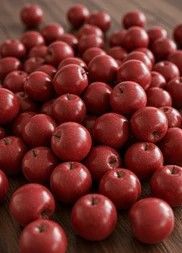
Do you remember the story of Johnny Appleseed? It’s a rather local story, for he was born in Leominster, MA. Most people know about this folk hero who moved across the heartland of America during the early western expansion on the frontier. Johnny became famous for scattering seeds as he walked, planting apple trees wherever he traveled. But what is less well known about him was that his Christian faith was central to who he was and what he did with his life. Besides planting apple trees, Johnny lived the life of a missionary. As he traveled, he shared the gospel with many adults and children, including Native Americans he met along the way. He saw the seeds he planted as symbolic of how God’s love is planted in us and bears fruit.
So, the question raised by today’s gospel is what kind of spiritual soil we have in our hearts. What kind of results is God getting from the seeds of faith planted in our hearts? It is possible that when we are with people among whom faith is not popular, or who have a different kind of faith, the seeds planted in our hearts can get trampled by contrary opinion, and we choose to go along with the crowd? Or we might have a Sunday morning kind of faith (or Saturday evening) where we focus on God and the message of the gospel for one hour or so, but don’t do much with it the rest of the week. Or it is possible that we have so many other concerns, obligations, responsibilities and interests that our faith seeds get choked, as if by so many weeds, that we allow little time for God or matters of faith?
The proof, as I’ve said, is more in a life well lived than in words well said. Let’s do a little mental experiment. Let’s ask ourselves, if I were to take the seeds of faith out of my heart and plant them in the world for everyone to see, what would the crop look like? If it’s an abundant harvest, that’s great! But if not, perhaps it’s time to pull the weeds, fertilize, water and turn to the sun.
One final thought. Over the years, when people ask me about the beauty of the rose garden, I have told them about my secret ingredient. When the holy water in the fonts is changed, quite often it has been put on the roses. So when it comes to the seeds of faith in our hearts, turning to the holy definitely works.
You might also like
Father's Homilies