Overcoming Indifference.
Homily for the Fifth Sunday of Lent
March 22, 2026
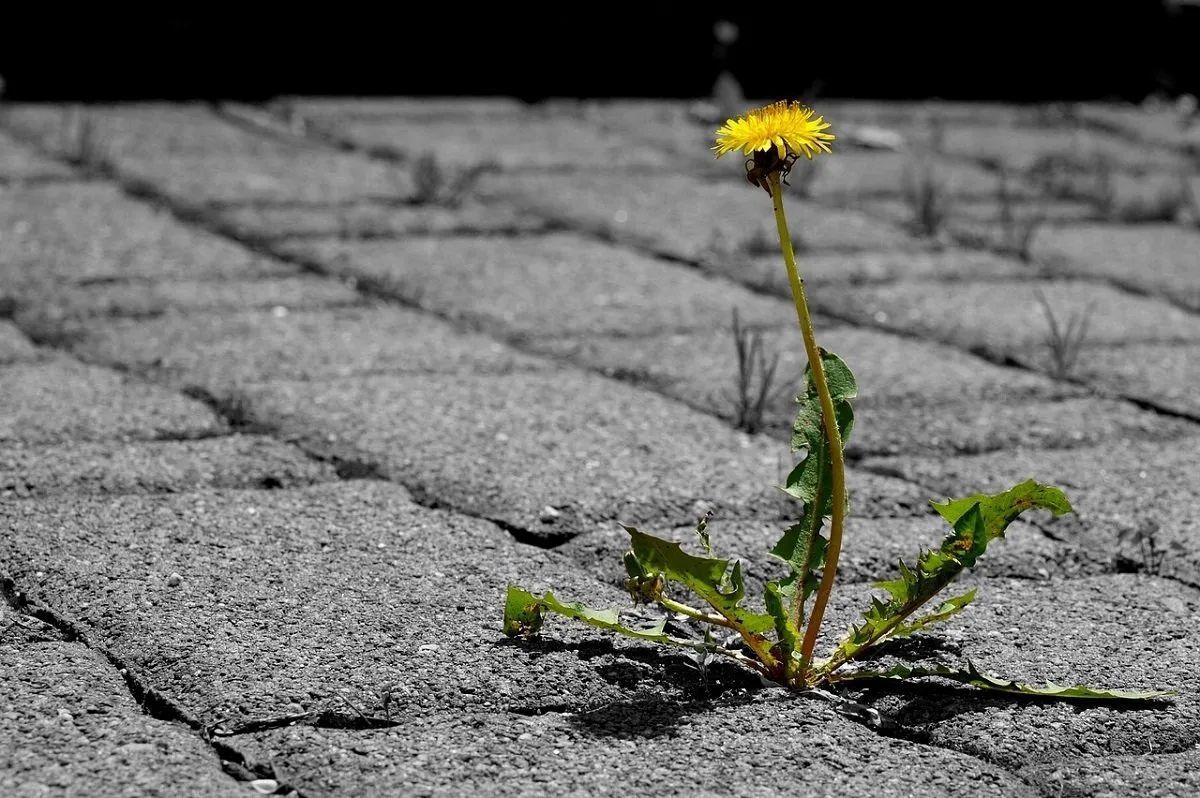
Once a wise old teacher was speaking to a group of young and eager students. He gave them the assignment to go out by the side of some lonely road and find a small, unnoticed flower. He asked them to study the flower for a long time. “Get a magnifying glass and study the delicate veins in the leaves, and notice the nuances and shades of color. Turn the leaf slowly and observe its symmetry. And remember: this flower might have gone unnoticed and unappreciated if you had not found and admired it.”
When the class returned after carrying out the assignment, the wise old teacher observed, “People are just like that unnoticed flower, too. Each person is different, carefully crafted, uniquely endowed. But you have to spend time with a person to know this. So many people go unnoticed and unappreciated because no one has ever taken time with them and admired their uniqueness.”
We have this incredibly powerful story of the raising of Lazarus, a person very definitely dead (in the tomb for four days) being brought back to life. And there is an obvious message in that. Can you imagine being there at that moment? Can you begin to understand the astonishment people felt? Can you envisage the reaction of Martha and Mary to have their absolute sorrow turned to utter joy? The obvious message is: Jesus is the real deal. He has power over life and death.
But, interestingly enough, in the gospel of Luke, there is a parable that Jesus tells (Luke 16:19-31) with a man named Lazarus. It is the story of the rich man and the beggar Lazarus, who sits at the rich man’s gate. His condition is dire; it says that Lazarus “longed to eat the scraps that fell from the rich man’s table,” and that he was covered with sores that dogs would lick. The point of the story is that, even though the wealthy man could have tripped over Lazarus, he never did anything to alleviate his condition. And, according to the story, he ends up in a place of torment.
But I wanted to explore this a bit further. So, I googled the question: What is the opposite of life? And, to my surprise, the search engine came up with four answers. (1) Probably the most obvious: the opposite of life is death. (2) "Death is not the opposite of life. Life has no opposite. Death is the opposite of birth. Life is eternal." ~ Eckhart Tolle ~ (3) That which is inanimate, such as a rock. (4) Now, here’s the most interesting one: from a psychological perspective, the opposite of life is apathy or indifference. The rich man in Jesus’ story is, at the very least, indifferent to the poor beggar.
Pope Francis often spoke out about indifference in today’s world. He noted that we can get so caught up in our own little worlds that we fail to notice the suffering going on around us. And, because of the rapid pace of the news about wars, terrorism, various disasters, and political infighting, we can simply be overwhelmed by all that is disconcerting and frightening. Also, there’s an epidemic of loneliness and a lack of connectedness in our world. Like the poor, lonely flower beside the road the teacher asked his students to notice and appreciate, many suffer alone, unnoticed and ignored.
But Jesus’ challenge, his basic message, is that we cannot be apathetic or indifferent. Remember the great judgment scene of Matthew chapter twenty-five: I was hungry, and you gave me food. I was thirsty, and you gave me drink. I was naked and you clothed me. I was ill, or in prison, and you took care of me. If we are apathetic or indifferent about people in our community, we’re being apathetic and indifferent to Jesus! We’re ignoring people who, like Lazarus in Jesus’ parable, are experiencing a slow death, brought about by hunger, poverty, illness and neglect.
Remember the assignment of the wise old teacher in the story, asking his students to study an overlooked flower beside the road. “People are just like that unnoticed flower, too. Each person is different, carefully crafted, uniquely endowed. But you have to spend time with a person to know this. So many people go unnoticed and unappreciated because no one has ever taken time with them and admired their uniqueness.”
My suggestion: try to do something concrete to make a real difference. Is there someone you know you should visit? Someone sad who could use some cheering up? Some food you can donate? Some clothes you don’t really need? Some worthy cause that you could support? If you make a difference, there will be that much less indifference in our community.
You might also like
Father's Homilies