Born to Look … Learning to See
Homily for the Third Sunday of Easter
April 19, 2026
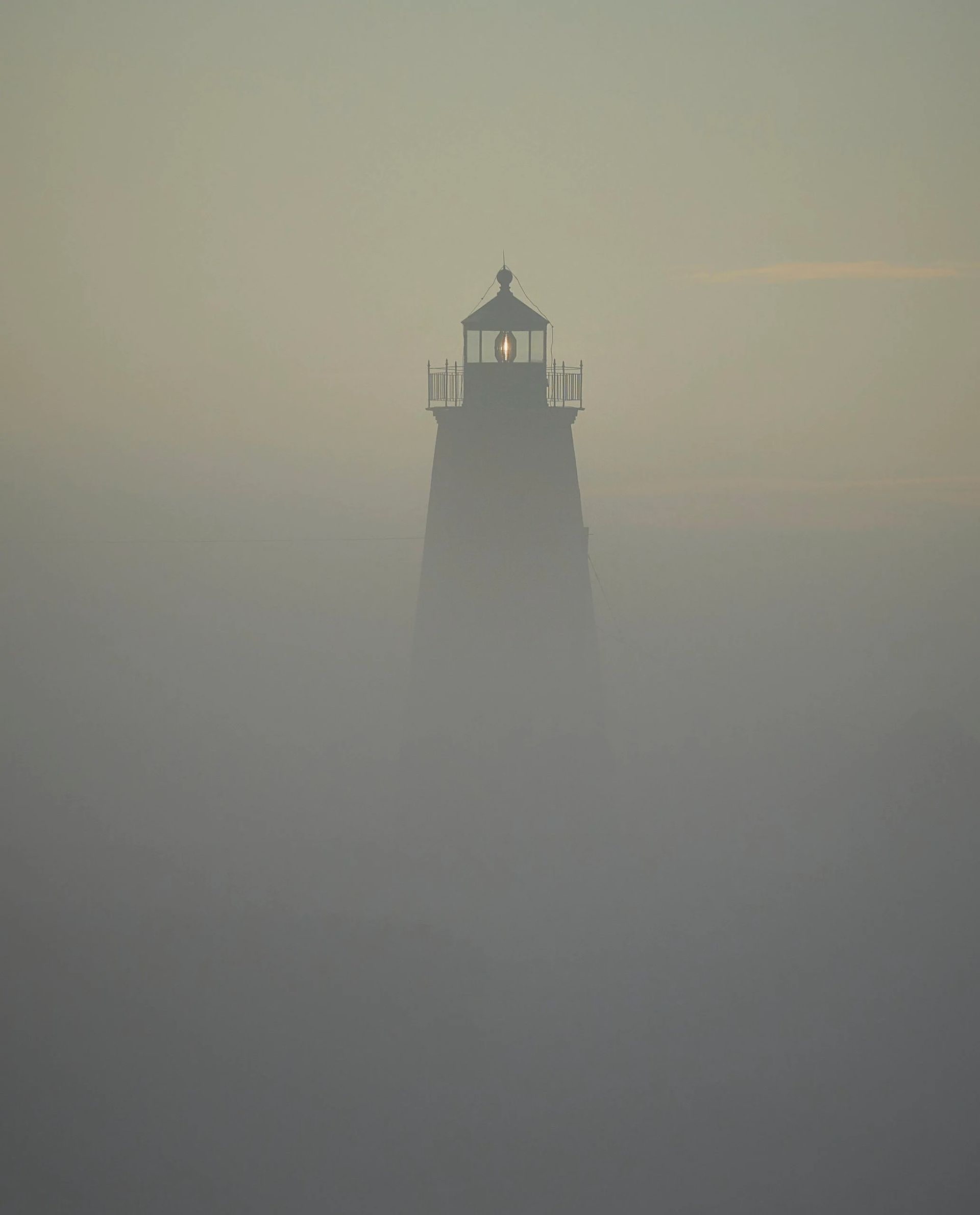
The scoutmaster used to take his troops on hikes along wilderness nature trails. After each hike he would challenge the scouts to describe what they had observed on their excursion.
The boys invariably hadn’t seen a fraction of what the scoutmaster had seen. He would wave his arms in great circles and shout, “Creation is all around you, but you are blocking it out. Stop wearing your raincoat in the shower. You were born to look, but you have to learn to see.”
You were born to look, but you have to learn to see.
One of the questions that always arises about today’s gospel passage is: Why didn’t the two disciples recognize Jesus? Let’s spend some time reflecting on the possibilities.
One obvious answer is that they were disheartened. Their lives are at their lowest point. They are sad and confused. The one they had pinned their hopes on had been humiliated and crucified in a horrible way. How could such a disaster be anything but a total defeat? How could a Messiah, or Savior, allow himself to be beaten and put to death?
In addition, the two disciples are probably terrorized, full of fear. The leaders of the people, both religious and political, had made their point. Anyone who rocks the boat and challenges authority will be dealt with swiftly and brutally. If the two were recognized as followers of Jesus, his fate could also be theirs.
Let me share another story with you, a story which shows how expectations can color what we see and experience.
----------------------------------
A young man from a wealthy family was about to graduate from high school. It was the custom in his affluent neighborhood for the parents to give the graduate a car as a graduation present. Bill and his father spent months looking at cars, and the week before graduation they found the perfect one. Bill was certain that the car would be his on graduation night.
Imagine Bill’s disappointment when, on the eve of the big day, his father handed him a gift-wrapped Bible! Bill was so angry, he hurled the Bible across the room and stormed out of the house, vowing never to return again. Bill and his father never saw each other again. Yet it was the news of his father’s death that brought Bill back home again.
One night, as he sat going through his father’s possessions that he was to inherit, Bill came across the Bible that his father had given him. He brushed away the dust and opened it to find a cashier’s check, dated the day of his graduation—for the exact amount of the car they had chosen together.
-------------------------------
As the scoutmaster said, “You are born to look, but you have to learn to see.”
What does today’s gospel passage want us to learn to see? One obvious answer is that the privileged place to encounter Jesus is in the celebration of the Eucharist, or Mass. In the gospel Jesus does two things: he interprets the Scriptures and how they apply to him; and he “breaks bread” with the two disciples. We thus have the two halves of the Mass: the liturgy of the word and the liturgy of the Eucharist.
The Bible is telling us where to look, and it is teaching us to learn to see. Like the cashier’s check in the Bible, Jesus’ presence is not always obvious or straightforward.
So, where and how should we look? The first place is the Bible. We need to take time to read God’s word slowly, savor it, and allow it to speak to us. If you are having difficulty, a commentary will help. Turning to those who know the Bible better that we do, and asking for clarifications and advice, will also help.
The second place of encounter with Jesus is the Eucharist. The mystery of Emmaus is that the disciples recognize Jesus in the “breaking of bread,” which was one of the phrases used for the celebration of the Eucharist. Try to enter the Mystery more and more by giving yourself totally, without distractions, to each part of the Mass. Savor what it means to gather with open minds and hearts; to listen to the message of Scripture, the inspired word of God; to take the message of the homily home with you and reflect on it; to ask for forgiveness and to pray for peace; to intercede for our needs and the needs of the whole world; to receive our Lord mindfully, and not just hurry through the motions.
Finally, in the Emmaus story, Jesus approaches his people who are depressed, disappointed and broken-hearted. At first, they do not recognize him. But as they listen more and more, their hearts start to burn within them. So, another way to experience the presence of Jesus Christ is to do as he did, to find value in what he taught and how he acted. He clearly said that he could be found in the poor and vulnerable: I was hungry, and you gave me food; I was thirsty, and you gave me drink; I was naked, and you clothed me; I was ill, or in prison, or lonely, and you visited me.
Today’s gospel gives us a blueprint for encountering Jesus and feeling his presence. But we have to give ourselves to it wholeheartedly. We were born to look, but we have to learn how to see. The Bible has a treasure in it, and it’s not a cashier’s check. The Eucharist has a presence in it, and it’s something more than bread. The people around us are children of God. They have a spark of the divine within them. We were born to look, but we have to learn how to see.
You might also like
Father's Homilies