 Where is your faith? Why did you doubt?
To begin, I want to share a couple of stories. The first comes from an ancient tradition concerning the Exodus of the Israelites out of Egypt. Picture the scene of the Hebrew nation led by Moses, fleeing from slavery and bondage. Their Exodus is stopped on the shores of the Sea, and the people are glancing back over their shoulders. God has promised them liberation and freedom. They know that and they believe it, but now they are standing on the shore of the sea and Pharaoh’s army is in hot pursuit.
Moses raises his arms and voice in prayer for God to lead his people to safety. He gestures with his staff over the water, but nothing happens. Indeed, nothing happens until the first person actually steps into the water and shows, through that simple act, that he has faith in God’s promise of salvation. When that first step of courage is taken, the sea parts, and the people cross over into freedom and liberation.
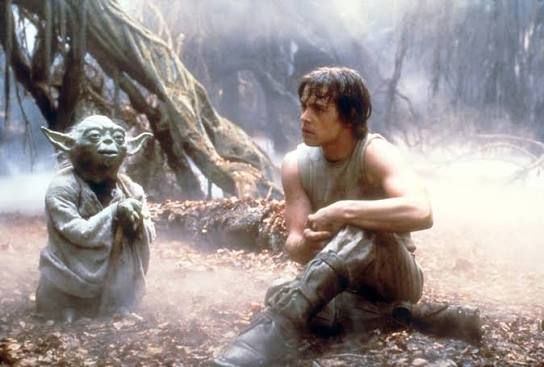
The second story is a more modern one, taken from the popular Star Wars movies. Those of you who have seen the films will remember the scene in which our hero, Luke Skywalker, has crash-landed his starship. He is seeking a Jedi master named Yoda to teach him the ways of becoming a Jedi warrior. Luke wants to free the galaxy from the oppression of the evil tyrant, Darth Vader.
So Yoda reluctantly agrees to help Luke and begins by teaching him how to lift rocks with his mental powers. Then, one day, Yoda tells Luke to lift his spaceship out of the swamp, where it sank after a crash landing. Luke complains that lifting rocks is one thing, but lifting a star-fighter spaceship is quite another matter. Yoda insists. Luke manages a valiant effort but fails in the attempt.
Yoda then focuses his mind, and lifts out the ship with ease. Luke, dismayed, exclaims, “I don’t believe it!” “That’s why you couldn’t lift it,” Yoda replied. “You didn’t believe you could.”
In our gospel reading we find incredible events being described—events that are so incredible that it’s hard to believe they happened. Jesus comes toward the boat, walking on the water of the sea. And Peter, much like young Luke Skywalker, challenges the master to enable him to do what Jesus is doing.
Jesus invites him to step out of the boat and to walk toward him. And for a while, it actually works. Peter is able to walk on the water, just as his master is doing. It works as long as he has his focus on Jesus and trusts in his power and his word. But then, he notices the improbability and the danger of his situation. Instead of keeping his eyes on Jesus, he notices the threatening nature of the storm—and he begins to sink. Jesus asks him why he doubts and what happened to his faith. But in that moment of fear and panic, Peter at least knows that he can cry to Jesus for help, and he is rescued.
Now, this gospel scene takes place in a very privileged situation, in the very presence of the Lord Jesus. I, personally, have never imagined myself trying to walk on water. But there’s a lesson for us here, nonetheless. There’s a whole slew of research that shows that our frame of mind makes a huge difference. If we strive to see our world in a hopeful way, with gratitude, and a desire to serve others with compassion, our mood becomes more positive. If we have a basic feeling of trust in God, knowing that, ultimately, we are in God’s hands, that kind of faith can free us from worry and paralyzing fear.
It is interesting to note that, for Jesus, the opposite of love was not necessarily hate. Rather it was fear fueled by doubt. How many times in the gospels he made statements like that to Peter: “Where is your faith?” To those who experienced healing, Jesus would most often say, “Your faith has made you well.” In his teaching, Jesus pointed to the birds of the air and the wildflowers: far less important in the scheme of things, they nonetheless are cared for by God. Not a single bird falls to the ground, he said, without God knowing it.
In the case of the Hebrew people at the time of the Exodus, it took one step of faith and courage to open the path to freedom. And in the case of Luke Skywalker, it required a belief in himself and his potential, a trust in the goodness and power of the universe to overcome the threat of evil through the power of love.
So…if you find yourself up to your neck in water, or in a frightening mess of one sort of another, how do you respond? There are, of course, things that are beyond our control. But our attitude, our sense of trust, our belief in the providence of God: these are the gifts our God offers us. Think of it: Jesus went to his death on the cross, still trusting that if only God’s will were being done, all would be well in the end. That most horrendous act of suffering and death became the most glorious doorway to our sharing in the life of God for all eternity—all because Jesus chose to trust rather than fear. And he invites us to summon our courage and to maintain our trust, even when we are challenged or threatened, and our very lives are at stake. He is there to help if, like Peter, we remember to seek that help.
You might also like
Father's Homilies