Compassion Wins Out.

It was a bitter, cold evening in northern Virginia many years ago. The old man’s beard was glazed by winter’s frost while he waited for a ride across the river. The wait seemed endless. His body became numb and stiff from the frigid north wind.


He heard the faint, steady rhythm of approaching hooves galloping across the frozen path. Anxiously, he watched as several horsemen rounded the bend. He let the first one pass by, without an effort to get his attention. Then another passed by, and another. Finally, the last rider neared the spot where the old man sat like a snow statue. As this one drew near, the old man caught the rider’s eye and said, “Sir, would you mind giving an old man a ride to the other side? There doesn’t appear to be a passageway by foot.”


Reigning his horse, the rider replied, “Sure thing. Hop aboard.” Seeing the old man was unable to lift his half-frozen body from the ground, the horseman dismounted and helped the old man onto the horse. The horseman took the old man not just across the river, but to his destination, which was just a few miles away. As they neared the tiny, but cozy cottage, the horseman’s curiosity caused him to inquire, “Sir, I notice that you let several other riders pass by without making an effort to secure a ride. Then I came up and you immediately asked for a ride. I’m curious why, on such a bitter winter night, you would wait and ask the last rider. What if I had refused and left you there?”


The old man lowered himself down from the horse, looked the rider straight in the eyes and replied, “I’ve been around these parts for some time. I reckon I know people pretty good. I looked into the eyes of the other riders and immediately saw there was no concern for my situation. It would have been useless even to ask them for a ride. But when I looked into your eyes, kindness and compassion were evident. I knew, then and there, that your gentle spirit would welcome the opportunity to give me assistance in my time of need.”


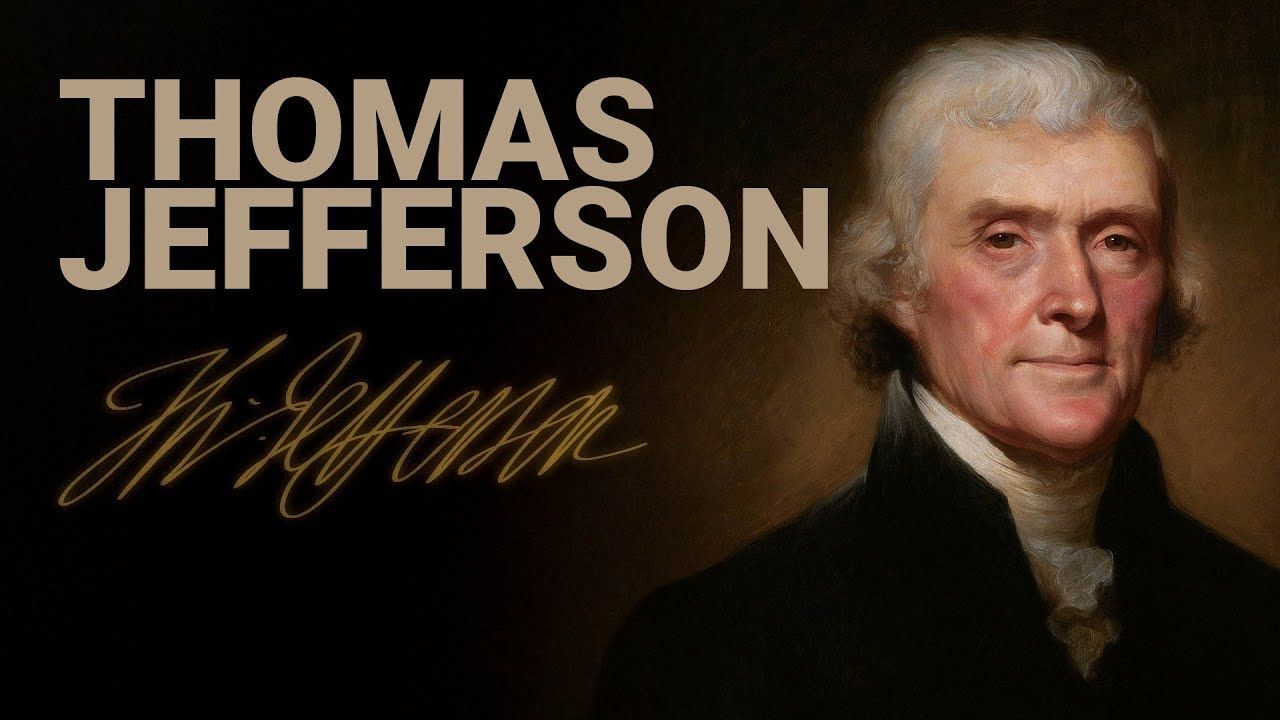
The horseman replied, “I’m most grateful for what you have said. May I never get too busy in my own affairs that I fail to respond to the needs of others with kindness and compassion.” With that, Thomas Jefferson turned his horse around and made his way back to the White House.


I find great wisdom in this story. And as I reflect on today’s gospel, I try to imagine what this poor woman, caught in the act of adultery, saw in the eyes of the people around her. Those who brought her to Jesus certainly had no compassion; it says they made her stand there in front of everyone. Most of the crowd that was gathered was probably indifferent to her plight. Maybe they jeered and joined others in calling for punishment. And finally, the woman looked into Jesus’ eyes. His words to her gave expression to what was in his heart. These men who were using you are really no better than you are. I do not condemn you. Jesus then probably lifted her up, dried her tears, embraced her, and sent her, with his encouragement, love and support, to live the rest of her life—a changed woman because her innate dignity as a human being was respected and valued.


I was reminded of this Gospel passage earlier this week when I read in the newspaper that immigration officials had removed four workers from a local farm. According to the article, one of the men had some kind of immigration problem on his record. It said that the other three were “collateral damage”—picked up, probably because they were family, or they protested, or they simply got in the way.


And I was also reminded by the Thomas Jefferson story that we have been blessed with some truly good and compassionate leaders throughout our history. Jimmy Carter comes to mind. I’m pretty sure he would treat people with dignity and respect. John McCain, who was a military hero and a person of principle, did the right thing when his vote mattered. Joe Biden was an excellent consoler-in-chief when people experienced death or disaster. These were leaders who showed compassion and were able to put people ahead of politics.


In light of today’s Gospel, I believe that we have to examine our own hearts and actions. Are we, at times, judgmental like the scribes and Pharisees? Are we quick to condemn others, while forgetting our own faults? Do we try to lift up those who are being beaten down? And do we respect everyone’s human dignity and human rights—or do we go along with the crowd, timidly sitting by when we see injustice? It doesn’t take much to make all the difference, as we see in today’s gospel: a kind word, a smile, a hand held out. Let’s be that difference!

You might also like

Father's Homilies

By Charlene Currie December 4, 2025
How Far Do You Want to Go?
By Charlene Currie November 28, 2025
Prairie Chickens and Eagles Homily for the Solemnity of Our Lord Jesus Christ, King of the Universe November 23, 2025 An American Indian tells about a brave who found an eagle’s egg and put it into the nest of a prairie chicken. The eaglet hatched with the brood of chicks and grew up with them. All its life the changeling eagle, thinking it was a prairie chicken, did what the other prairie chickens did. It scratched in the dirt for seeds and insects to eat. It clucked and cackled. And it flew in a brief thrashing of wings and flurry of feathers no more than a few feet off the ground. After all, that’s how prairie chickens were supposed to fly. Years passed, and the changeling grew very old. One day it saw a magnificent bird soaring far above in the cloudless sky. Hanging with graceful majesty on the powerful wind currents, it soared with scarcely a beat of its strong golden wings. “What a beautiful bird!” said the changeling eagle to its neighbor. “What is it?” “That’s an eagle—the chief of the birds,” the neighbor clucked. “But don’t give it a second thought. You could never be like him.” So, the changeling eagle never gave it another thought. And it died thinking it was a prairie chicken. Today, we are celebrating the fact that Jesus Christ is the King of all God’s creation. And yet, it is strange that the gospel passage chosen for this feast is the scene of Jesus’ crucifixion. Notice how weak he is. Consider how he is laughed at and made fun of. “He saved others, let him save himself if he is the chosen one, the Christ of God….If you are the King of the Jews, save yourself.” So, the problem is one of expectations. The bystanders were looking for an eagle, and all they saw before them was a prairie chicken! And yet, at the end of the gospel, this prairie chicken seems to have some power that prairie chickens don’t normally have. When Jesus is asked by the thief being crucified with him, “Jesus, remember me when you come into your kingdom,” Jesus replies, “Amen, I say to you, today you will be with me in Paradise.” Hardly a promise that could be made by a prairie chicken! What’s going on here? I’d like to refer us to a passage we find in the writings of St. Paul, a section of his letter to the Philippians that is the second reading on Palm Sunday, when we reflect on the crucifixion of Jesus. Here it is: “Christ Jesus, though he was in the form of God, did not regard equality with God something to be grasped. Rather, he emptied himself, taking the form of a slave, coming in human likeness; and found human in appearance, he humbled himself, becoming obedient to the point of death, even death on a cross. Because of this, God greatly exalted him and bestowed on him the name which is above every name, that at the name of Jesus every knee should bend, of those in heaven and on earth and under the earth, and every tongue confess that Jesus Christ is Lord, to the glory of God the Father.” Jesus taught the way of humility and service. He came to raise others up, especially those who were bowed down by poverty or prejudice. He taught that there was no greater love than to lay down one’s life for the love of others. Greatness is found not in building oneself up at the expense of others, but in building up others, especially those who need it the most. So, Jesus emptied himself, to the point of looking like a prairie chicken, and in doing so he showed us the way to the eternal kingdom by means of humble service, that we might become who we truly are, eagles destined to soar beyond the clouds.
By Charlene Currie November 28, 2025
Too Stubborn to Quit. Homily for the Thirty-Third Sunday in Ordinary Time November 16, 2025 The California coast was blanketed in fog July 4, 1952. Twenty-one miles to the west, on Catalina Island, Florence Chadwick, a 34-year-old-long-distance-swimmer, waded in to the water and began swimming toward the California coast. She had already conquered the English Channel, swimming in both directions. Now she was determined to be the first woman to swim the Catalina Channel. As the hours ticked off, Chadwick fought bone-chilling cold, dense fog, and sharks. Several times, sharks had to be driven off by rifles. Fatigue never set in, but the icy water numbed her to the point of exhaustion. Straining to make out the shore through her swimmer’s goggles, she could see only a dense fog. She knew she could not go any farther. Although not a quitter, Chadwick shouted to her trainer and her mother in the boat and asked to be taken out of the water. They urged her not to give up, but when she looked toward the California coast, all she could see was thick fog. So after fifteen hours and fifty-five minutes of fighting the elements, she was hauled from the channel into the boat. Frozen to the bone and her spirit defeated, Chadwick was devastated when she discovered she was only a half-mile from the coast! She felt the shock of failure…. Two months later, Chadwick swam that same channel, and again fog clouded her vision, but this time she swam with her faith intact—that somewhere behind that fog was land. This time she succeeded. Not only was she the first woman to swim the Catalina Channel, but she beat the men’s record by two hours. A line from this story that struck me was: “this time she swam with her faith intact.” Florence Chadwick was able to persevere to her goal because she believed she could do it. In today’s gospel passage, Jesus speaks about the challenges and threats that will be faced by the first disciples when they go out into the world and start proclaiming the message. He doesn’t mince words or paint a rosy picture. Tough times of suffering will come. But then he adds, “By your perseverance you will secure your lives.” In reflecting on this teaching, I was reminded of another Bible story. The disciples are in a boat crossing a lake. Jesus had stayed behind to spend some time in prayer. Then, late at night, he comes toward them, walking on the water. The disciples are frightened, thinking they’re seeing a ghost. Jesus tries to reassure them, when Simon Peter yells, “Lord, if it is really you, command that I walk on the water toward you.” Jesus invites him to do so, and Peter steps out of the boat and actually walks on the water toward Jesus. But then, he looks down and notices the threatening situation he is in. And he begins to sink. Jesus has to fish him out of the water and get him back into the boat (Cf. Matthew 14:22-33). What makes the difference? As long as Peter keeps his eyes on Jesus, he can do the seemingly impossible. When he focuses on the threat, he sinks. We find something similar in the writings of St. Paul. In his first letter to the Corinthians, he writes, “You know that while all the runners in the stadium take part in the race, the award goes to one man. In that case, run so as to win! Athletes deny themselves all sorts of things. They do this to win a crown of leaves that withers, but we a crown that is imperishable. I do not run like a man who loses sight of the finish line…” (1 Cor 9:24-26). So, when we have to face difficulties, when we live in hard times, when we feel left out or let down, how are we supposed to keep going? Florence Chadwick failed when she couldn’t see the finish line. When she found faith withing herself again, she was able to go back and reach her goal. Peter was even able to walk on water, but only as long as he kept his eyes on Jesus. And Paul writes that he has been able to keep going, even while facing all sorts of hardships, because he has never lost sight of the goal. When facing challenges, a stubborn faith is required; perseverance is needed. It’s very easy to give up, to call it quits, to feel that there’s no way to face all the problems that pile up. We don’t have to face life’s challenges alone. Jesus is with us. And he asks us to be there for each other. He asks us to persevere, to have faith, to be too stubborn to quit.