
What Belongs to Caesar … And to God?
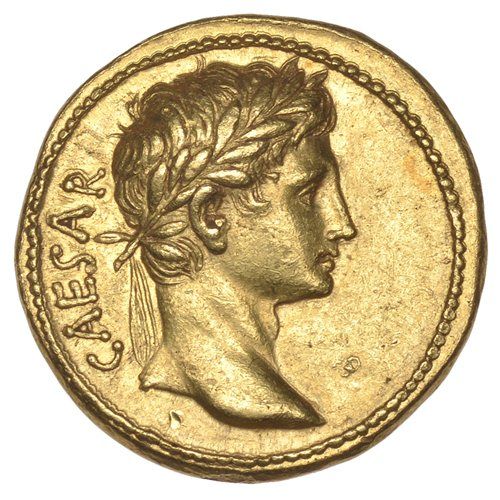
Homily for the Twenty-ninth Sunday in Ordinary Time
October 18, 2026
A man once bought a small railroad that had been losing money for years. He got it at a real bargain, but those who sold it to him secretly laughed at what they called his poor judgment. He closed the railroad, sold the rails and equipment at a good price, and found himself with thousands of acres of real estate that had formerly been right-of-way.
The former owners had looked at it as a losing railroad; he looked at it as an opportunity to acquire valuable land.
-------------------------------------
In today’s gospel, the Pharisees pose a question to Jesus that they feel, one way or the other, will harm Jesus. The tax imposed on Israel by the Roman Empire was especially hated. It certainly was taxation without representation. Tax collectors such as Matthew were hated because they were seen as collaborators with an immoral system. So, the Pharisees feel they have set a perfect trap.
If Jesus says, “By all means, pay the tax,” he would probably see his popularity disappear and be considered a traitor much like Matthew. On the other hand, if he says, “Don’t pay the tax,” he would be seen as an insurrectionist who was openly calling for revolt against the Empire, and that wouldn’t end so well for him.
So, what happens? First, note that it is the questioners who have the Roman coinage that would be used for the tax payment. Jesus has nothing, and “no place to lay his head.” It is interesting to note that when the people went to the Temple area in Jerusalem and needed to make a purchase for sacrifice, Roman money was not accepted. It first had to be exchanged for money produced by the Temple. Then it could be used for religious purposes.
What Jesus does, then, is to expose the hypocrisy of those who are trying to trap him. Then, he responds in a way that disarms those who are thinking in either/or terms. Jesus acknowledges that we, in fact, live in a world in which there are social and civic needs. As long as what is asked of us is moral, then there’s no problem. For example, in his first letter to Timothy, Paul teaches, “First of all, I urge that petitions, prayer, intercessions, and thanksgivings be offered for kings and those in authority, that we may be able to lead undisturbed and tranquil lives in perfect piety and dignity” (1 Tim 2:1-2). So, we “repay to Caesar” for all that enables us to live in society and leads to the common good.
But then, there’s the other half of the wisdom Jesus provides: Repay to God what belongs to God. Our life, every breath we take, our gifts and abilities, our earth—the beautiful home God has created—our need to love and be loved, respecting each person’s dignity, taking care of the weak and the fragile, living in a nourishing and non-violent way, the promise of eternal life, striving to become more like God our Creator and Jesus our Redeemer: these are the ways in which we honor God and tend to what belongs to God.
Today’s gospel invites us to look beyond the divisions and pettiness that are forcing us into an either/or, love/hate way of relating to one another. Maybe this means that we’re focusing on giving to Caesar so much that we’ve forgotten that we are called to something better, something greater, something more noble and life-giving. There’s a growing dissatisfaction in our world because we’ve lost a deeper sense of who we are and what we’re meant for. Today’s gospel puts us back on the right path: certainly, give to Cesar what belongs to Caesar, but not at the expense of what we owe our God.
You might also like
Father's Homilies